2023 Porsche Taycan Turbo S 93.4kWh Performance Battery Plus
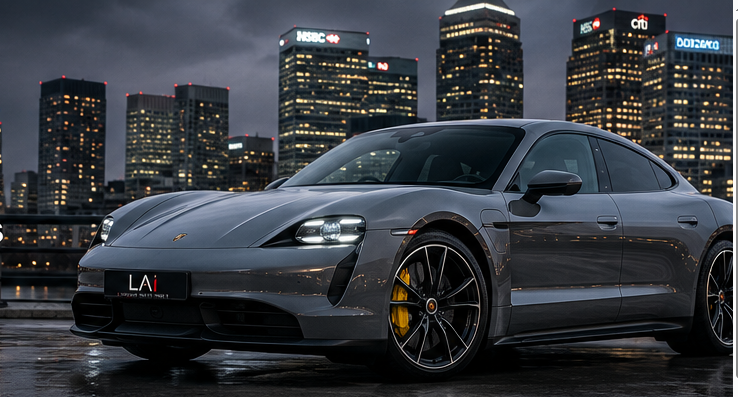
Complete Buyer’s Guide · Used Performance EV · July 2026
2023 Porsche Taycan Turbo S — 93.4kWh Performance Battery Plus: The Definitive London Ownership Guide
Updated 23 July 2026 · Specification, real-world range, London ownership costs, comparisons and a full pre-purchase checklist
What Is the Porsche Taycan Turbo S — and Why Does It Matter?
The Porsche Taycan Turbo S is the flagship performance variant of Porsche’s electric saloon range — a luxury electric car built to deliver genuine sports-car acceleration, four-door practicality, and daily usability in equal measure. Fitted with the 93.4kWh Performance Battery Plus, dual-motor all-wheel drive, and 761 PS (750 hp) on Launch Control overboost, it occupies a rare position in the market: a premium EV that out-accelerates most combustion supercars while remaining genuinely usable as a daily car in central London.
It’s desirable for a simple reason — nothing else combines Porsche’s chassis engineering, an 800V charging architecture, and a four-seat luxury cabin in one package. It suits buyers who want the badge, the performance, and the ownership experience without compromising on space or usability: executives replacing a combustion performance saloon, EV adopters moving up from a Model S or Model 3, and enthusiasts who want an electric performance saloon that still rewards a good road. In a market increasingly crowded with fast EVs, the Taycan Turbo S remains the one most cross-shopped against genuine Porsche sports cars, not just other electric saloons — that’s what sets it apart.
Contents
- Vehicle Highlights
- Why This Vehicle Stands Out
- Full Specification Table
- Battery: Range & Charging
- Performance & Driving Experience
- London Ownership Benefits
- Technology & Luxury Features
- 2023 vs 2025: How It Compares
- Alternatives Buyers Also Consider
- Ideal Buyer Profile
- Pre-Purchase Inspection Checklist
- Frequently Asked Questions
Vehicle Highlights
- 761 PS (750 hp) / 560kW system output on Launch Control overboost, with 1,050 Nm of torque
- 0–62 mph in 2.8 seconds, with a top speed of 161 mph
- 93.4kWh Performance Battery Plus — the largest pack Porsche offered on this generation Taycan, standard on every Turbo S
- 800V charging architecture supporting up to 270kW DC fast charging
- Dual-motor all-wheel drive with a two-speed rear transmission — unusual engineering among performance EVs
- Standard rear-axle steering and adaptive air suspension for high-speed stability and low-speed agility
- ULEZ compliant with zero tailpipe emissions, suited to daily Central London use
- Porsche Communication Management infotainment with full smartphone integration and OTA software updates
- Four-seat luxury cabin with genuine rear headroom and a usable boot plus front luggage compartment
- Sports-saloon dynamics with genuine daily-driver comfort — a rare combination in this performance bracket
Why This Vehicle Stands Out
Within Porsche’s own Taycan range, the Turbo S sits at the top of the non-GTS performance hierarchy — above the base Taycan, the 4S, and the Turbo, and offering meaningfully more overboost power than all three. Despite the “Turbo” naming (a nod to Porsche’s combustion heritage rather than a literal turbocharger — there isn’t one), the Turbo S is defined by its Launch Control calibration, standard PCCB-capable braking package, and a chassis tune that Porsche engineers specifically toward repeatable, sustained high-performance driving rather than a single straight-line party trick.
Compared with the standard Taycan or 4S, the Turbo S’s real differentiator isn’t outright range or comfort — it’s the way the extra power is deliverable, repeatably, without the thermal fade that affects lesser EVs after two or three hard launches. That’s the appeal for buyers moving from combustion performance cars: the Turbo S doesn’t just feel fast once, it keeps feeling fast. Long-term, this positions the Turbo S as the more collectible and search-relevant used Taycan variant — it’s consistently the trim buyers search for by name, and values on well-documented, low-mileage examples have held up more firmly than entry Taycan variants as the range has expanded.
Full Specification: 2023 Taycan Turbo S, 93.4kWh Performance Battery Plus
The 2023 model year sits within the pre-facelift Taycan generation (the significantly more powerful update arrived for 2025MY), so figures below are specific to this year — don’t assume the newer car’s numbers apply to the one you’re viewing.
| Spec | 2023 Taycan Turbo S |
| Battery | 93.4kWh Performance Battery Plus (33 modules, 396 cells, liquid-cooled, 800V) |
| System power (overboost with Launch Control) | 560kW / 761 PS |
| Torque | Up to 1,050 Nm |
| 0–100 km/h (0–62 mph) | 2.8 seconds (manufacturer claim) |
| 0–200 km/h | 9.8 seconds |
| Drive layout | Dual-motor, all-wheel drive |
| WLTP range | Up to 412 km (approx. 256 miles) — Turbo S-specific figure, lower than the standard Turbo due to the extra performance hardware |
| Max DC fast charging | Up to 270kW — roughly 100km of range added in 5 minutes under ideal conditions |
| Drag coefficient | 0.22 Cd |
The 93.4kWh Battery: Range, Charging & EV Ownership
Every Taycan Turbo and Turbo S ships with the 93.4kWh pack as standard — it isn’t an option on this trim, unlike the base Taycan and 4S, where it’s an upgrade over the smaller 79kWh unit. That matters when you’re comparing listings: a Turbo S advertised with “Performance Battery Plus” isn’t a special add-on, it’s simply confirming the car has its factory-standard battery rather than something unusual.
In practice, the bigger pack exists here to support sustained high-output driving (repeated launches, track use, high-speed cruising) rather than purely to stretch range — the Turbo S’s WLTP figure is actually lower than the entry Taycan’s despite the same-size battery, because the drivetrain draws more to deliver the performance.
For buyers transitioning from a petrol performance car, the ownership shift is less dramatic than expected: the 800V architecture means public rapid charging stops are genuinely quick — a 10–80% top-up in the low 20-minute range at a capable 270kW+ charger is comparable to a fuel-and-coffee stop, not a lengthy detour. For longer UK touring, that charging speed is the difference between the Taycan being usable for motorway trips and being restricted to local driving; plan around rapid-charger-equipped service stations on longer routes and it behaves like any other capable long-distance car, just with a different refuelling rhythm.
Performance & Driving Experience
The Turbo S is the version built around repeatable, brutal acceleration rather than a single party trick. Launch Control delivers the full 761 PS overboost on demand, and the two-speed rear transmission — unusual for an EV — helps it keep pulling hard past the point where most electric performance cars start to taper off. Where a single-speed EV can feel like it runs out of urgency past highway speed, the Taycan’s second gear keeps the acceleration curve flatter for longer, which is exactly the sensation buyers coming from a combustion Porsche or AMG expect and often find missing elsewhere in the EV performance segment.
Day to day, the standard adaptive air suspension and rear-axle steering make the car noticeably more composed than the outright power figures suggest — it tightens its turning circle at low speed for London’s tighter streets and multi-storey car parks, then stabilises the rear at motorway speed. Body control through faster corners benefits from the low centre of gravity the battery pack provides, giving the Taycan a planted, genuinely sporting feel that’s closer to a 911 than to a typical luxury saloon. This is Porsche engineering applied without compromise to a four-door, four-seat platform, and it’s the main reason the Turbo S is cross-shopped against sports cars, not just other EVs.
London Ownership Benefits: What Changes If You Live Here?
London ownership of a Taycan Turbo S comes with a specific, current set of rules worth understanding before you buy — some genuinely favourable, one recently changed.
- ULEZ compliance: as a zero-tailpipe-emission EV, the Taycan Turbo S is fully ULEZ compliant across Greater London, with no daily charge and no exemption paperwork required — this remains unaffected by other policy changes.
- Congestion Charge — updated for 2026: from 2 January 2026, electric vehicles are no longer fully exempt from London’s Congestion Charge. EVs registered on TfL’s Auto Pay system now pay a discounted rate of £13.50/day (a 25% discount off the standard £18), with the discount scheduled to reduce further from March 2030. This is a genuine change in day-to-day running costs for anyone driving into central London regularly, and worth factoring into any total cost of ownership comparison against a combustion alternative.
- Daily commuting suitability: the compact turning circle, rear-axle steering, and strong regenerative braking make the Taycan genuinely easy to live with in stop-start Central London traffic, despite its performance-car pedigree.
- Home charging practicality: ideal for buyers with a driveway or private off-street parking, where a home wallbox delivers efficient overnight charging. It’s a materially different equation for flat or apartment dwellers.
- Apartment ownership considerations: without dedicated off-street parking or a residents’ charging bay, owners are dependent on London’s public charging network — extensive, but worth checking for reliable rapid or fast chargers near your specific address before committing to daily EV ownership.
- Central London driving: the car’s size is broadly comparable to a Panamera or 5 Series — manageable on London’s roads, though parking sensors and the surround-view camera (where fitted) earn their keep in tighter multi-storey car parks.
- Motorway journeys: refined, quiet, and genuinely quick when overtaking, with the 800V charging network making longer trips out of London straightforward provided you route via rapid-charger-equipped services.
Technology & Luxury Features
Inside, the Taycan Turbo S pairs Porsche’s driver-focused instrument layout with a genuinely premium material set — the specific leather, trim, and options fitted vary car to car, so always confirm the exact specification against the individual vehicle’s build sheet rather than assuming any two Turbo S cars are equipped identically. Common to the range is Porsche Communication Management (PCM), Porsche’s curved digital instrument cluster, and available additional displays including a passenger-side screen on higher-specification cars.
- Digital, configurable instrument cluster with Porsche’s driver-focused UI
- Porsche Communication Management infotainment with smartphone integration and over-the-air software updates
- Driver assistance systems including adaptive cruise control and parking assistance (specification-dependent — confirm on the individual car)
- Adaptive air suspension and rear-axle steering as standard equipment on this trim
- Premium interior materials with a range of leather and trim options across the model’s production run
- Optional equipment commonly found on well-specified cars includes ceramic composite brakes (PCCB), upgraded sound systems, and a panoramic glass roof — verify what’s actually fitted rather than assuming factory options
How It Compares: 2023 vs the 2025 Facelift
| Model | Power | 0–60mph | WLTP Range |
| 2023 Taycan Turbo S (this car) | 761 PS | ~2.4–2.8s | ~256 miles |
| 2023 Taycan Turbo | 680 PS | ~3.2s | ~280 miles |
| 2025+ Taycan Turbo S (facelift) | up to 938 hp | 2.3s (claimed) | Improved over pre-facelift |
The 2025 facelift brought a significant power increase, so pre-facelift cars like this 2023 tend to offer better relative value for similar real-world performance — worth knowing if the seller is pricing against newer figures.
Alternatives Buyers Also Consider
Most serious Taycan Turbo S buyers cross-shop a small set of comparable high-performance EVs before deciding. Here’s how the conversation usually goes:
- Porsche Taycan GTS: the enthusiast’s alternative within Porsche’s own range — sharper value, slightly less outright power than the Turbo S, and a chassis tune some drivers prefer for road use. Buyers who want Porsche dynamics without paying for the last increment of power often land here instead.
- Audi RS e-tron GT: mechanically related to the Taycan (shared platform), with a warmer, slightly less clinical interior character. Buyers who want Porsche-level performance with Audi’s design language and typically softer depreciation on the used market consider this the closest genuine alternative.
- Tesla Model S Plaid: quicker in a straight line on paper and with longer real-world range, but without the Taycan’s two-speed transmission engineering or Porsche’s chassis pedigree. Buyers choosing between the two are usually deciding between outright numbers (Tesla) and driving engagement plus badge (Porsche).
- Mercedes-AMG EQS 53: larger, more limousine-like, with a strong luxury-tech interior. Appeals to buyers prioritising cabin space and comfort over the Taycan’s more overtly sporting road manners.
In practice, most buyers who cross-shop all four end up choosing the Taycan Turbo S for the same reason: it’s the only one that drives like a Porsche sports car first and an EV second, without giving up genuine four-seat usability.
Ideal Buyer Profile
The Taycan Turbo S tends to suit a specific set of buyers rather than the broad EV market generally:
- Executives and entrepreneurs who want a car that performs as well as it presents, with genuine day-to-day comfort
- London and South East commuters who drive regularly into central London and want ULEZ compliance alongside serious performance
- EV adopters upgrading from a Tesla or another EV who want a step up in build quality and driving dynamics
- Performance car enthusiasts transitioning from combustion Porsches or German performance saloons, who want the acceleration and chassis feel to carry over
- Family buyers seeking luxury who need genuine four-seat (occasionally four-adult) practicality without sacrificing outright performance
Pre-Purchase Inspection Checklist
1. Battery health report. Ask for a Porsche-generated state-of-health reading, not just a range estimate on the dash — degradation isn’t always visible in the displayed range.
2. Charging history. Frequent 270kW DC rapid charging is normal for this car, but ask whether it’s been a daily fast-charge pattern versus mostly home/AC charging — it affects long-term battery wear.
3. Air suspension check. Standard on the Turbo S — listen for compressor noise and check for uneven ride height, a common wear item on higher-mileage cars.
4. Two-speed gearbox behaviour. Confirm smooth, silent shifts between gears under hard acceleration — this component is unique to the Taycan among EVs and worth a specific test drive check.
5. Software/update history. Porsche has issued multiple over-the-air and dealer updates for the Taycan platform — confirm the car is on a current software version.
6. Full-service history with an authorised Porsche Centre. EV drivetrains need less servicing than combustion cars, but brakes, tyres, and 12V auxiliary battery replacement still follow a schedule — verify it’s been kept up.
Frequently Asked Questions
Is the Porsche Taycan Turbo S a good daily driver?
Yes — despite its performance focus, the adaptive air suspension, rear-axle steering, and refined cabin make it genuinely comfortable in daily traffic, and the compact turning circle suits London’s tighter streets better than its size suggests.
What is the real-world range?
Expect noticeably less than the 256-mile WLTP figure in cold weather or sustained motorway speeds — real-world figures in the 180–220 mile range are commonly reported for the Turbo S.
How fast can it charge?
Up to 270kW DC on a capable rapid charger, taking roughly 22–25 minutes for a 10–80% top-up under good conditions — one of the faster charging times available on any production EV at this price point.
Is it ULEZ compliant?
Yes, fully and permanently — as a zero-tailpipe-emission EV it meets ULEZ standards with no daily charge across Greater London.
Is it suitable for London commuting?
Yes, though be aware that from January 2026 EVs are no longer fully exempt from the Congestion Charge — Auto Pay-registered EVs now pay a discounted £13.50/day rather than the full £18. Factor this into your running-cost comparison versus a combustion alternative.
How does it compare with the Tesla Model S Plaid?
The Plaid is quicker in a straight line on paper with a longer claimed range, but the Taycan’s two-speed transmission, chassis tuning, and Porsche build quality give it a more engaging, sports-car-like driving character that many buyers coming from combustion performance cars prefer.
Is the 93.4kWh battery an upgrade or standard on the Turbo S?
Standard — every Turbo and Turbo S has it. It’s only an optional upgrade on the base Taycan and 4S.
Does the Turbo S badge mean it has a turbocharger?
No — there’s no turbo. Porsche kept the naming convention from its combustion range to signal performance tier, which causes confusion for first-time EV buyers.
Is home charging necessary, or can I rely on public chargers?
A home wallbox is strongly preferable if you have off-street parking — it’s cheaper and more convenient. Flat or apartment owners without private parking can still run a Taycan comfortably in London given the density of public rapid chargers, but should check local charger reliability near their address first.
How does the Turbo S differ from the standard Taycan or 4S in daily use?
The core daily-use experience — comfort, cabin space, infotainment — is similar across the range. The Turbo S’s difference shows up specifically under hard acceleration and on demanding roads, where its extra power, braking, and chassis hardware are actually exercised; around town, it drives much like any other well-specified Taycan.
Considering a used Taycan Turbo S?
Ask the seller for the battery state-of-health report and full Porsche Centre service history before viewing — it’ll save you time if either raises a flag.