Explore captured Nissan Qashqai listings
Move from this guide to model-filtered dealer listings. Compare advertised prices, mileage, registration details and retailers, then plan your buying costs and prepare an enquiry.
Browse Nissan Qashqai inventory snapshots Explore the dealer directory
Evidence status: supplied inventory snapshots captured 31 October–1 November 2026. Available at capture does not confirm availability today. Listings may cover different registrations and model generations from those discussed in this guide; check the exact vehicle and source capture date. Confirm price and availability with the retailer. Enquiry preparation is local and does not send a message to a dealership.
Is the Nissan Qashqai Right for a London Family in 2026?
The Nissan Qashqai is a five-seat family SUV sold in the UK with two powertrains: a 1.3-litre mild-hybrid petrol and the e-POWER hybrid, in which an electric motor always drives the wheels and the petrol engine only generates electricity. This guide asks which London households the Qashqai suits, which version fits which household, and when a Kia Sportage or another rival is the better match.
London Auto Index is an independent research publication. It sells no cars, takes no commission and has no commercial relationship with Nissan, Kia or any dealer. The analysis combines what UK buyers are actually asking AI systems about the Qashqai, current Nissan UK and Kia UK data, and the London rules and costs that change the answer. It is the companion to LAI’s Kia Sportage London Buyer Intelligence study.
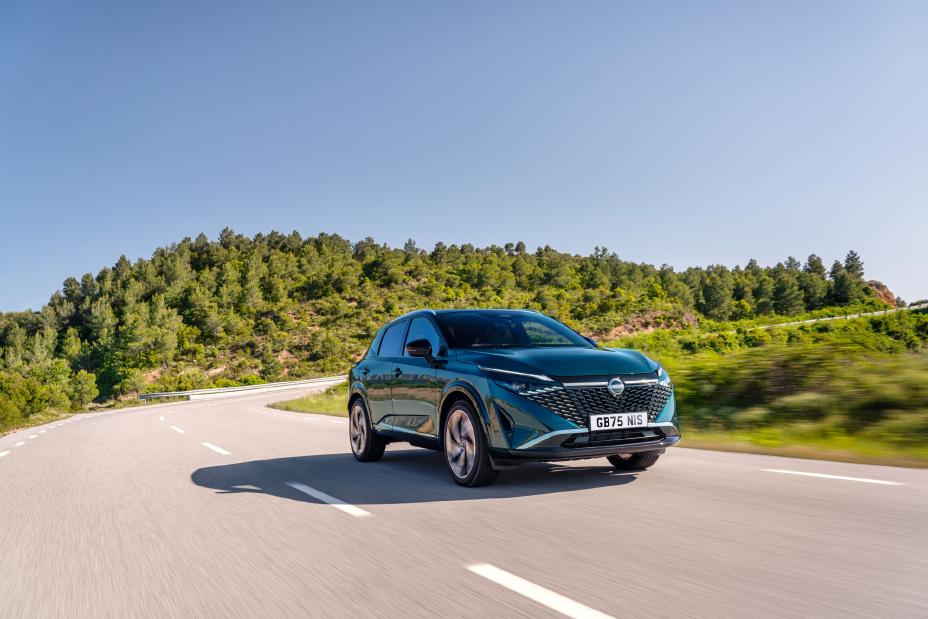
The short answer
The Nissan Qashqai suits London families who want a compact, easy-to-place SUV with electrified town driving and no charging. The e-POWER is the version most suited to London: it drives like an electric car in traffic, never needs plugging in, and was measured by Auto Express at about 52.5 mpg in real use. The mild hybrid is cheaper and can tow much more. The Qashqai’s limits are a smaller boot than the Kia Sportage, a three-year warranty and a four-star Euro NCAP rating (2025). Households that need maximum space, a long warranty or a plug-in hybrid should compare the Sportage.
- The Qashqai e-POWER and the Sportage Hybrid cost almost exactly the same. They start at £34,875 and £34,895 respectively, so the choice between them is about how each system works and what each car offers, not price.
- The Kia Sportage is the car AI systems most associate with the Qashqai. It is named in 9 of 19 “similar cars” answers in LAI’s dataset. Nine Qashqai-vs-Sportage prompts appear word for word in both LAI’s Qashqai and Sportage datasets.
- e-POWER is widely misunderstood. One AI intent in the dataset asks where to find charging points for the Qashqai e-POWER, a car that cannot be plugged in.
- None of the 456 buyer-relevant prompts mentioned London, ULEZ, the Congestion Charge or parking.
- In Hackney, a Qashqai e-POWER falls into a cheaper resident-permit band than any Sportage except the plug-in hybrid. That is a London cost difference no national review covers.
Nissan Qashqai at a glance (UK, September 2026)
The current Qashqai is the third generation (known as J12), built in Sunderland and on sale in the UK since 2021. It was restyled in 2024 and received an updated e-POWER powertrain in August 2025. There is no diesel, no plug-in hybrid, no fully electric version and no four-wheel drive in the current UK range. All figures are UK specification, checked on 19 September 2026.
| Item | Mild hybrid (1.3 DiG-T) | e-POWER |
|---|---|---|
| Power | 158PS | Up to 205PS (1.5-litre turbo petrol acting only as a generator) |
| Gearbox and drive | 6-speed manual or Xtronic automatic; front-wheel drive | Single-speed; front-wheel drive; the electric motor always drives the wheels |
| List price (OTR) | From £30,635 (Acenta Premium manual) | From £34,875 (Acenta Premium) to £43,225 (Tekna+) |
| Official economy (WLTP) | About 44–46 mpg | 62.8 mpg at launch; Nissan UK now quotes “up to 65.7 mpg” |
| Official CO₂ | About 140–142 g/km | About 98–102 g/km |
| Plug-in charging | No | No. It cannot be plugged in. |
| Boot, seats up | 455–504 litres depending on trim and audio system; up to 1,447 litres with the seats folded | |
| Size (L × W × H) | 4,425 × 1,835 × 1,625mm (width excluding mirrors); turning circle 11.1m | |
| Braked towing | 1,680–1,800kg | About 750–770kg |
| Euro NCAP | Four stars (2025 test): adult 78%, child 85%, vulnerable road users 65%, safety assist 62% | |
| Warranty | 3 years or 60,000 miles; e-POWER components 5 years or 60,000 miles | |
Prices, power and dimensions are from Nissan UK, with current e-POWER prices from the RAC review (16 September 2026). Launch economy and CO₂ are from Nissan’s August 2025 press release. Mild-hybrid economy, CO₂ and turning circle are from Carwow and Auto Express. Boot figures come from the RAC and Auto Express, towing figures from Auto Express and Carwow, and the safety rating from Euro NCAP.
What the Qashqai is not. There is no seven-seat Qashqai today. The Qashqai+2 seven-seater was sold from 2008 to 2013, and Nissan’s larger X-Trail is the brand’s seven-seat option in some versions. The e-POWER is not an electric car and has no charging socket. Answers quoting diesel economy or four-wheel drive describe older Qashqais.
What are UK buyers asking AI about the Nissan Qashqai?
London Auto Index analysed 1,000 Nissan Qashqai prompt-and-answer records from Google AI Overviews, Google AI Mode, ChatGPT and Gemini for the UK market. It also analysed 50 ChatGPT and Gemini intent records captured on 19 September 2026. After removing unrelated prompts, parts searches and non-London location queries, 456 records (383 unique prompts) reflected genuine buying or ownership decisions. Used buying and reliability were the most frequent themes.
The raw file was unusually noisy. 300 records had nothing to do with cars, surfacing because of similar-sounding words such as Nisa supermarkets, the Serbian city of Niš, Nishane perfumes and NUS. A further 173 were DIY parts and accessory searches from existing owners: brake pads, tie rods, seat covers and manuals. LAI kept 40 records about known-fault components (EGR valve, turbo, injectors, gearbox) because they reveal real reliability worries.
| Intent cluster | Records | Unique prompts | Share | Typical questions | Buyer stage |
|---|---|---|---|---|---|
| Used buying and older generations | 80 | 76 | 17.5% | “used nissan qashqai for sale”; 2007–2020 model years; J10 and J11 | Discovery and validation (used) |
| Reliability and common problems | 75 | 46 | 16.4% | “years to avoid”; “common problems”; gearbox, EGR and turbo faults | Validation and ownership |
| Size, boot and practicality | 61 | 51 | 13.4% | Boot space; dimensions; “7 seater qashqai” | Discovery |
| Powertrain, e-POWER and economy | 59 | 55 | 12.9% | “qashqai e-power review”; mpg; “electric qashqai”; 4WD | Comparison |
| General review and new model | 54 | 50 | 11.8% | “is nissan qashqai a good car”; “new qashqai 2025” | Discovery |
| Trims and specification | 49 | 43 | 10.7% | Trim levels; N-Connecta; Tekna+ | Comparison |
| Price, deals and finance | 40 | 40 | 8.8% | New price; PCP deals; e-POWER price | Purchase |
| Comparisons and alternatives | 37 | 21 | 8.1% | “kia sportage vs nissan qashqai”; city driving; “cars similar to qashqai” | Comparison |
The platforms play different roles. Google AI Overviews carried all 40 price and finance records and 74 of the 80 used-buying records: that is where buyers research a Qashqai. The conversational assistants were dominated by repair and ownership questions, with 62–70 records per platform about parts and DIY, which shows how owners live with one. When asked for Qashqai alternatives, AI answers named the Kia Sportage most often (9 of 19 answers), followed by the Ford Kuga (7), Hyundai Tucson (5), Volkswagen Tiguan (4) and Skoda Karoq (3).
Where current AI answers go wrong
Conflicting economy figures: e-POWER economy is quoted variously as 53–54 mpg, 62.8 mpg and “up to 65.7 mpg”, mixing the pre-2025 and updated powertrains. Boot confusion: answers cite 504 or 479 litres without explaining that the figure depends on trim and the optional Bose audio system. Unsourced numbers: an “average £849 insurance” figure and a “140,000-mile life expectancy” appear with no source. Size misstatements: one answer called the Qashqai and Sportage “very similar in size”, when the Sportage is 115mm longer and 30mm wider.
No answer in the dataset connected the Qashqai to London charging access, the Congestion Charge or resident-permit costs. None explained that the Sportage offers a plug-in hybrid and the Qashqai does not, which changes the comparison for households with a driveway.
Is the Nissan Qashqai good for a London family?
For a London family of four that mostly drives in town, the Qashqai is a strong fit. It is smaller and easier to place than most family SUVs, the e-POWER version is quiet and efficient in traffic, and it needs no charging. Its weaknesses for families are a boot of up to 504 litres, rear legroom that trails the Kia Sportage, a three-year warranty and a four-star Euro NCAP result in 2025.
On the evidence side, the Qashqai’s size is its main London advantage. At 4,425mm long and 1,835mm wide it is 115mm shorter and 30mm narrower than the Kia Sportage. Owners in the Auto Express Driver Power 2026 survey praised its comfortable ride and placed it 29th of 50 cars, ahead of the Kia Sportage (37th). The RAC named the Qashqai e-POWER its Best Family Car in its 2026 New Car Awards.
The family-space limitations are measurable. Autocar measured 710mm of rear legroom against 750mm in the Sportage. The RAC describes the boot as “considerably smaller” than those of the Hyundai Tucson and Ford Kuga, and it falls to about 455 litres on high-spec versions with the Bose subwoofer. The same Driver Power owners criticised expensive servicing.
What is Nissan e-POWER and how does it work?
Nissan e-POWER is a series hybrid. The wheels are always driven by an electric motor, never directly by the petrol engine. The 1.5-litre petrol engine acts only as a generator, charging a small battery that feeds the motor. The car cannot be plugged in: all of its energy comes from petrol. It drives like an electric car without needing charging, but it is not an electric car.
Nissan states that “the wheels are driven only by an electric motor” and that the petrol engine “is used only to charge the battery” (Nissan UK). The updated 2025 system raised peak output to 205PS and, by Nissan’s account, cut CO₂ from 116 to 102 g/km and cabin noise by up to 5.6dB. AM Online reports a 2.1kWh battery, 330Nm of torque and 0–62mph in 7.6 seconds.
| System | What drives the wheels | Plug in? | Example |
|---|---|---|---|
| Series hybrid (e-POWER) | Always the electric motor; the engine only generates electricity | No | Nissan Qashqai e-POWER |
| Conventional (parallel) hybrid | The engine, the electric motor or both, through a gearbox | No | Kia Sportage Hybrid |
| Plug-in hybrid | As a parallel hybrid, but with a larger battery for around 40 miles of electric driving | Yes | Kia Sportage Plug-in Hybrid |
| Mild hybrid | The petrol engine; a small electrical system assists it and recovers braking energy | No | Qashqai 1.3 DiG-T mild hybrid |
What it means in London. Because the motor always drives the wheels, e-POWER gives smooth, instant electric acceleration in stop-start traffic, plus a one-pedal driving mode (AM Online). Because the engine is a generator, it can start and rev independently of road speed. AM Online found the engine “revs unpredictably when not accelerating”, which is a normal characteristic of the system, not a fault. Because there is no plug, e-POWER has none of a plug-in hybrid’s charging dependency. It also cannot run on cheap home electricity.
Nissan Qashqai Mild Hybrid vs e-POWER: Which Makes More Sense in London?
For most London households the Qashqai e-POWER is the better match. In stop-start traffic it drives on electric power, its official and reviewer-measured economy is well ahead of the mild hybrid’s, and it sits in lower tax and permit bands. The mild hybrid makes sense for buyers who want the lowest price or a manual gearbox, or who need to tow more than about 770kg.
| Factor | Mild hybrid (158PS) | e-POWER (205PS) |
|---|---|---|
| Purchase price | From £30,635 (manual) Nissan UK | From £34,875; about £4,240 more than the entry mild hybrid |
| Urban driving | Petrol engine drives the wheels; mild assistance only | Electric motor always drives the wheels; smooth and quiet at low speed |
| Stop-start traffic | Manual or CVT automatic; Auto Express finds the CVT “lethargic” at low speeds | No gear changes; instant electric response; a one-pedal driving mode |
| Motorway use | Conventional petrol behaviour | Engine runs more often to supply the motor. AM Online recorded 54.5 mpg on mainly A-road and motorway driving. |
| Official economy | About 44–46 mpg | 62.8 mpg (launch figure); “up to 65.7 mpg” (Nissan UK) |
| Reviewer-measured economy | No single consistent figure; Drive reports “mid-40s” | 52.5 mpg (Auto Express test); about 50 mpg (Parkers) |
| First-year VED (2026/27) | £560 (131–150 g/km) | £365–£405 (91–110 g/km, depending on version) |
| External charging | Not possible | Not possible |
| Driving character | Familiar petrol car; engine noise matches speed | Electric-car feel; engine can rev independently of road speed |
| Boot and practicality | Up to 504 litres | Up to 504 litres; Drive says e-POWER does not sacrifice meaningful luggage capacity |
| Towing (braked) | 1,680–1,800kg | About 750–770kg |
| Complexity | Lower | Higher (generator, battery and inverter). e-POWER components carry a 5-year/60,000-mile warranty. |
| Best suited to | Tight budgets, manual preference, towing, low annual mileage | Mostly urban and suburban driving; households without charging |
A household in inner London that rarely leaves the North and South Circular roads gets the most from e-POWER: most of its mileage is the low-speed driving where a series hybrid feels most like an electric car. A household that tows a caravan, or covers few miles a year and wants the cheapest entry price, can rationally choose the mild hybrid. For households in between, the price gap is hard to recover through fuel alone. At 7,000 miles a year, the official-figure fuel saving is roughly £320 a year, so the roughly £4,240 gap would take over a decade to recover. Resale values, finance offers and tax bands can change that sum. The calculator further down this page lets you test it against your own mileage.
Which Qashqai makes sense for London driving?
The e-POWER is the Qashqai most suited to typical London driving, because it drives on electric power in traffic and needs no charging. Its advantage over the mild hybrid is greatest on short, slow urban trips and smallest for buyers who tow. ULEZ and the Congestion Charge treat both versions the same, so the decision rests on driving pattern, budget and towing needs.
Photo gallery: the current Nissan Qashqai
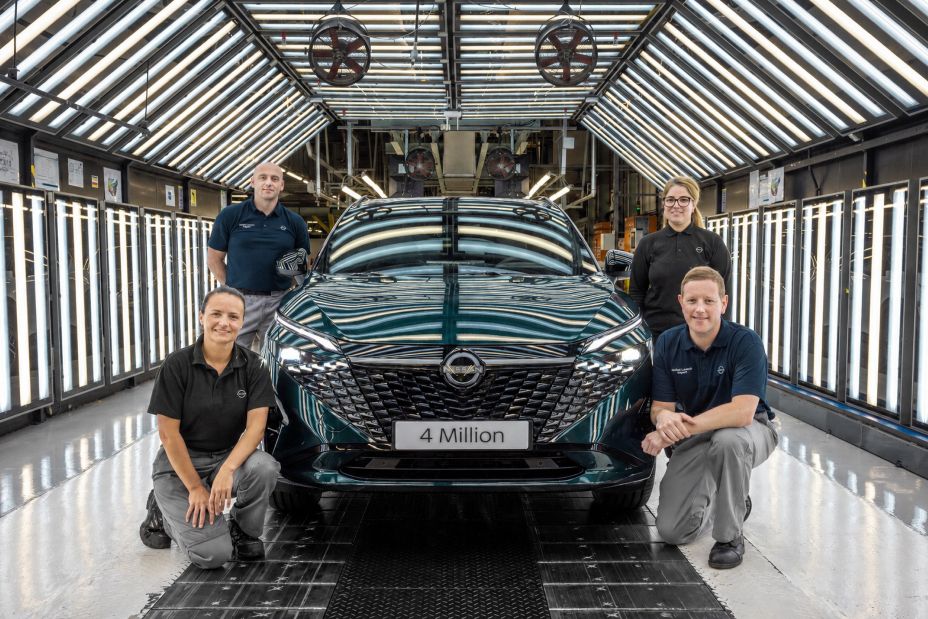
Select any image to enlarge it. All photographs show the current third-generation (J12) Qashqai and are official Nissan press images.


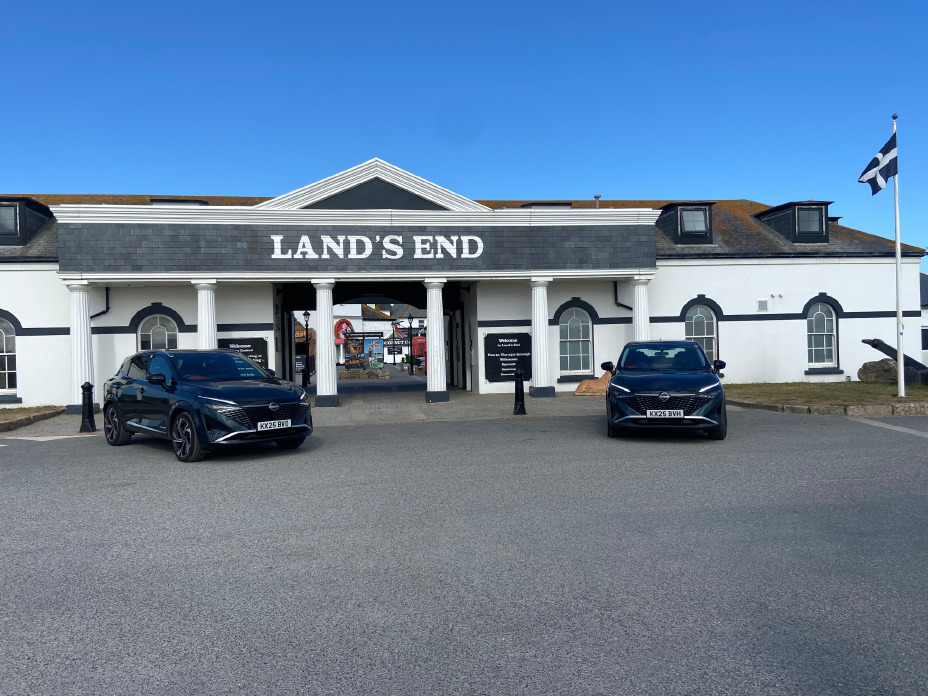


Land’s End to John O’Groats, August 2025 (manufacturer demonstration). Photo: Nissan UK newsroom.
Do ULEZ or the Congestion Charge affect the Qashqai?
No current Nissan Qashqai pays the ULEZ charge, so ULEZ does not separate the mild hybrid from the e-POWER. Both pay the full Congestion Charge. Since 2 January 2026 the charge has been £18 a day, and the Cleaner Vehicle Discount has applied only to fully electric vehicles, so an e-POWER is treated exactly like a petrol car. Where London rules do separate the versions is in CO₂-based resident parking permits and first-year vehicle tax.
| London rule | Qashqai mild hybrid | Qashqai e-POWER | Source |
|---|---|---|---|
| ULEZ (petrol cars must meet Euro 4; otherwise £12.50 a day) | Compliant | Compliant | TfL |
| Congestion Charge (£18 a day from 2 January 2026) | Pays in full | Pays in full; no hybrid discount | TfL; Fleet News |
| Hackney resident permit 2026/27 (CO₂ bands) | Band 8 (131–150 g/km): £162 | Band 5 (91–100 g/km): £110, or band 6 (101–110 g/km): £119, depending on version | Hackney Council |
| First-year VED | £560 | £365–£405 | GOV.UK |
For most London buyers, “ULEZ compliant” means only that the Qashqai adds no daily charge when driven in the zone, which is true of every new petrol car sold today. It does not make the car cheaper to use in central London. Permit prices vary by borough, and the exact CO₂ figure for a specific version and wheel size decides the band, so check the V5C or quote figure against your own council’s table.
Is the Nissan Qashqai easy to park in London?
The Qashqai is one of the more manageable family SUVs for London parking. At 4,425mm long and 1,835mm wide (excluding mirrors), with an 11.1-metre turning circle, it is noticeably smaller than a Kia Sportage. It still needs care in tight residential bays and older multi-storeys, and camera technology matters most on the trims that have it. LAI does not score parking difficulty, because it depends on the street, the bay and the driver.
The measurable facts: the Qashqai is 115mm shorter and 30mm narrower than the Sportage (4,540 × 1,865mm). Its turning circle is 11.1m (Carwow). AI answers describe a 360-degree camera on the N-Connecta, but LAI could not verify standard equipment by trim from Nissan UK for this guide, so confirm camera and sensor fitment on the specific car. Width including mirrors is quoted in some answers as 2,084mm, a figure LAI could not verify from Nissan UK, so it is not relied on here.
Is the Nissan Qashqai big enough for a family?
For a family of four with a pushchair or weekly shopping, the Qashqai is generally big enough. Its boot is 455–504 litres, and the rear seat suits children and average-height adults. It is not the roomiest option: the Kia Sportage and Hyundai Tucson offer larger boots and the Sportage more rear legroom. Families who regularly carry three children across the rear or bulky sports kit should measure before buying.
| Measure | Nissan Qashqai | Type of evidence |
|---|---|---|
| Boot, seats up | 504 litres on entry versions; about 455 litres on high-spec versions with the Bose subwoofer | Measured specification (RAC, Auto Express) |
| Boot, seats folded | Up to 1,447 litres | Measured specification |
| Rear legroom | 710mm (Kia Sportage: 750mm) | Autocar measurement |
| Boot lip | AM Online notes a high boot lip | Reviewer opinion |
| Rear headroom | Auto Express notes less headroom than a Peugeot 3008 | Reviewer opinion |
| Seats | Five only | Specification |
| Safety | Euro NCAP four stars (2025): child occupant 85%, adult occupant 78% | Independent crash test |
Euro NCAP noted that the Qashqai lacks a child presence detection system and scored weakly in some autonomous emergency braking scenarios involving cyclists. The four-star rating comes from a 2025 test under newer, stricter protocols. It is not directly comparable with ratings awarded to other cars under earlier protocols, including the Kia Sportage’s five stars from 2022.
What does a Nissan Qashqai cost to run?
The Qashqai’s running costs depend mainly on the powertrain. The e-POWER uses noticeably less fuel, pays less first-year vehicle tax and falls into cheaper CO₂-based permit bands. The mild hybrid is cheaper to buy. LAI does not publish a single total-cost-of-ownership figure, because insurance, finance and resale values vary too much between households.
| Cost factor | Mild hybrid | e-POWER | Source |
|---|---|---|---|
| Fuel per mile (official figure) | ≈16.8p (45.6 mpg) | ≈12.2p (62.8 mpg) | LAI calculation at 168.14p a litre (DESNZ, week of 14 September 2026) |
| Fuel per mile (reviewer-measured) | No consistent figure | ≈14.6p (52.5 mpg, Auto Express) | LAI calculation |
| First-year VED | £560 | £365–£405 | GOV.UK |
| VED from year two | £200 a year, plus £440 a year in years two to six if the list price exceeds £40,000. That applies to Tekna+ and some option-heavy versions. | GOV.UK | |
| Insurance groups | 19–30 (Drive) or 21–26 (Auto Express), depending on version | Drive; Auto Express | |
| Service interval | Annually or every 18,000 miles (Parkers) | Every 12,000 miles, extended from 9,000 on the updated e-POWER (Nissan) | Parkers; Nissan UK press release |
| Servicing cost | No published Nissan fixed price was verified. Driver Power 2026 owners criticised “expensive servicing”. | Auto Express | |
| Resident permit (Hackney) | £162 | £110–£119 | Hackney Council |
| Depreciation | LAI found no reliable, current UK-specific residual value figure. Ask any lender or lessor for the guaranteed future value it is using. | — | |
Current Nissan offer, dated. On 19 September 2026, Nissan UK’s Qashqai page advertised PCP finance at 0% APR on selected versions, for example £219 a month for the Acenta Premium. Deposits, terms, mileage limits and validity dates were not shown on the summary page, so check the full terms with Nissan or a dealer. Offers change frequently.
LAI fuel cost calculator: Qashqai vs Sportage
Enter your annual mileage and choose which economy figures to use. The calculator estimates annual fuel cost only. It excludes tax, insurance, servicing and finance.
Figures used: official, Qashqai mild hybrid 45.6 mpg, Qashqai e-POWER 62.8 mpg, Sportage Hybrid FWD 50.4 mpg, Sportage petrol 39.8 mpg. Reviewer-measured: Qashqai e-POWER 52.5 mpg and Sportage Hybrid 44 mpg (both Auto Express), Sportage petrol about 40 mpg (Drive). No consistent reviewer-measured figure was found for the Qashqai mild hybrid. The Sportage Plug-in Hybrid is excluded because its cost depends mainly on how it is charged. See LAI’s Sportage study.
How economical is the Nissan Qashqai?
The Qashqai e-POWER is the more economical Qashqai by a clear margin, and the RAC rates it more efficient than rivals including the Hyundai Tucson, Kia Sportage and Ford Kuga. Auto Express recorded 52.5 mpg and AM Online 54.5 mpg, against an official 62.8 mpg (launch figure) and Nissan’s current “up to 65.7 mpg” claim. The mild hybrid’s official figure is about 44–46 mpg. Real-world results depend heavily on speed, temperature and journey length.
The spread of e-POWER figures in AI answers (53 to 65.7 mpg) comes from mixing the pre-2025 powertrain with the updated one, and different trims and wheel sizes. Nissan’s August 2025 figures for the updated system were 62.8 mpg and 102 g/km, a 15% economy improvement on the previous version. Nissan’s widely publicised 75 mpg over 837 miles from Land’s End to John O’Groats was a manufacturer-run demonstration by its own engineers, not an independent test or a typical-use figure.
How reliable is the Nissan Qashqai?
The evidence on the current Qashqai’s reliability is reasonably positive but not exceptional. It finished 29th of 50 in Auto Express’s Driver Power 2026 owner survey, ahead of the Kia Sportage (37th). Parkers expects the mechanicals to be reliable and notes that the diesel and older automatic gearbox issues of earlier generations do not apply. Most reliability worries in AI searches relate to older J10 and J11 cars.
| Evidence | Finding | Type |
|---|---|---|
| Auto Express Driver Power 2026 (23 July 2026) | Qashqai Mk3 29th of 50 (84.16%). Owners praised the ride and criticised servicing costs. | Independent owner-satisfaction survey |
| Parkers running-costs review | “Mechanicals should be reliable”. Three recalls noted, the most significant affecting steering-wheel sensors that detect the driver’s hands, on about 9,500 UK cars. | Independent review |
| Which? (reported by Nissan, January 2023) | Nissan reported that Which? named the Qashqai the UK’s most reliable car (Nissan release, January 2023) | Manufacturer citing a consumer survey; now dated |
| Dataset signal | Known-fault searches (EGR valve, turbo, injectors, gearbox, “1.5 dCi problems”, “2014–2018 faults”) point overwhelmingly at older diesel and CVT cars | LAI prompt analysis |
What do Qashqai owners actually complain about?
Owner concerns about the current Qashqai fall into three groups. Documented issues are few and include a steering-wheel sensor recall. Anecdotal reports on owner forums centre on e-POWER system warnings, generator noise and 12V battery issues. Several complaints describe how the e-POWER normally behaves, particularly the engine running at unexpected moments. Separating the three matters more than counting complaints.
Documented or verified issues
- Recall: steering-wheel haptic sensors that could wrongly detect a driver’s hands in semi-autonomous mode, on about 9,500 UK cars (Parkers). Check any car on the GOV.UK vehicle recall checker.
- Lower-speed CVT response on the mild-hybrid automatic, described by Auto Express as “lethargic”.
- Euro NCAP findings (2025): no child presence detection and weaker cyclist AEB performance in some scenarios.
Recurring anecdotal reports
- Threads on the Qashqai Forums repeatedly discuss e-POWER system fault warnings, battery management warnings and 12V battery issues on J12 cars.
- Other threads discuss “excessive noise” from the e-POWER.
- Driver Power 2026 owners criticised servicing costs.
These are anecdotal. LAI could not read the discussions in full, so it cannot say how common any issue is or whether it affects the updated 2025 e-POWER.
Normal characteristics sometimes interpreted as problems
- The engine revs without the car accelerating. In a series hybrid the engine charges the battery on its own schedule, so it can run while stationary or cruising. AM Online noted this behaviour. It is how the system works, not a fault.
- Real-world economy below the official figure. Every tested e-POWER returned less than the official WLTP figure, which is normal for all cars.
- A small “hybrid” battery. The e-POWER battery (reported at 2.1kWh) is designed as a buffer, not for long electric-only driving. It cannot be charged from the mains.
What warranty does Nissan provide?
A new Nissan Qashqai comes with a three-year or 60,000-mile warranty, whichever comes first. e-POWER hybrid components, including the motor and inverter, are covered for five years or 60,000 miles. Paint is covered for three years and corrosion perforation for 12 years. Nissan sells 12-month extended warranties for cars up to 10 years old and 100,000 miles, subject to an inspection.
- Whole vehicle: 3 years or 60,000 miles (Nissan UK).
- Hybrid and e-POWER components: 5 years or 60,000 miles, whichever comes first.
- Extended warranty: 12-month plans for cars under 10 years old and 100,000 miles, with a dealer inspection before cover starts (Nissan UK). Prices are not published.
- Comparison: the Kia Sportage has a seven-year or 100,000-mile warranty, with unlimited mileage for the first three years. The Hyundai Tucson has five years with unlimited mileage.
Which Qashqai trim should you consider?
The UK Qashqai comes in five trims: Acenta Premium, N-Connecta, N-Design, Tekna and Tekna+. Nissan UK lists the lowest price for each at £30,635, £33,105, £35,025, £35,025 and £41,125 respectively. The e-POWER adds £4,240 on Acenta Premium and N-Connecta. The trim that fits depends on how much technology and parking assistance a household will use in London.
| Trim | From (OTR) | Suits a buyer who… |
|---|---|---|
| Acenta Premium | £30,635 (mild hybrid); £34,875 (e-POWER) | …wants the core car at the lowest price, including the cheapest e-POWER. |
| N-Connecta | £33,105 (mild hybrid); £37,345 (e-POWER) | …wants Google built-in infotainment, which Nissan UK lists from this trim. A glass roof is optional (Nissan price list). |
| N-Design | £35,025 | …prefers the sportier styling pack. |
| Tekna | £35,025 | …wants more comfort equipment. AM Online notes heated seats are not available below Tekna. |
| Tekna+ | £41,125 (mild hybrid); £43,225 (e-POWER) | …wants the fullest specification and accepts that it is listed above the £40,000 expensive-car tax threshold. The RAC notes that versions with the Bose subwoofer have about 455 litres of boot. |
Nissan Qashqai vs Kia Sportage: Which Suits a London Family?
Neither car suits every London family. The Nissan Qashqai is smaller, easier to place and more economical in reviewers’ tests, and its e-POWER suits households that cannot charge. The Kia Sportage is larger, has a bigger boot, a seven-year warranty and a plug-in hybrid option that the Qashqai lacks. Their no-plug hybrids start within £20 of each other, so a London family should decide on space, warranty, charging access and parking, not price.
This is the comparison buyers ask AI about most: the Sportage is the first-named Qashqai alternative in LAI’s dataset, and nine comparison prompts appear in both LAI datasets. Every Sportage figure below was re-checked against Kia UK on 19 September 2026. For the full Sportage analysis, see Kia Sportage for a London Family: Petrol, Hybrid or Plug-in Hybrid?
| Factor | Nissan Qashqai | Kia Sportage | What it means for a London buyer |
|---|---|---|---|
| Starting price | £30,635 (mild hybrid) | £31,395 (petrol) | The Qashqai is £760 cheaper to enter |
| No-plug hybrid price | e-POWER from £34,875 | Hybrid from £34,895 | Effectively identical; decide on other factors |
| Powertrain choices | Mild hybrid 158PS; e-POWER 205PS | Petrol 147bhp; hybrid 235bhp; plug-in hybrid 283bhp | The Sportage offers three routes, the Qashqai two |
| Hybrid approach | Series hybrid: the motor always drives the wheels | Parallel hybrid: engine and motor both drive the wheels through a 6-speed automatic | The e-POWER feels more like an electric car in traffic |
| Plug-in option | None | PHEV: 44 miles electric range (FWD), 40 miles (AWD) | Only the Sportage can use cheap home electricity |
| External charging | Not possible on any version | Only the PHEV | Households without a driveway lose nothing by choosing either no-plug hybrid |
| All-wheel drive | Not available | Hybrid GT-Line S; PHEV GT-Line and GT-Line S | Relevant only for buyers who need AWD |
| Official economy (no-plug hybrid) | 62.8 mpg (e-POWER, launch figure); up to 65.7 mpg (Nissan UK) | About 49–50 mpg (hybrid FWD) | A clear official advantage for the Qashqai |
| Reviewer-measured economy | 52.5 mpg (Auto Express) | About 44 mpg (Auto Express) | Same publication, both hybrids: the Qashqai is about 19% more economical |
| Boot, seats up | 455–504 litres | 540–591 litres | The Sportage holds roughly 80–90 litres more on comparable versions |
| Rear legroom | 710mm | 750mm | Autocar measurements; the Sportage is roomier behind |
| Length × width (excl. mirrors) | 4,425 × 1,835mm | 4,540 × 1,865mm | The Qashqai is 115mm shorter and 30mm narrower |
| Parking | 11.1m turning circle (Carwow) | Larger footprint; 360-degree camera and remote parking assist on GT-Line S | The Qashqai is the easier fit; the Sportage offers stronger aids on its top trim |
| Warranty | 3 years / 60,000 miles; e-POWER parts 5 years / 60,000 miles | 7 years / 100,000 miles (unlimited for the first 3 years) | A decisive difference for owners keeping a car beyond three years |
| Safety | Euro NCAP four stars (2025 protocol) | Euro NCAP five stars (2022 protocol) | Tested under different protocols, so not directly comparable |
| Technology | Google built-in infotainment from N-Connecta (Nissan UK) | Auto Express finds the infotainment graphics “beginning to look dated” | Try both systems with your own phone before deciding |
| Owner satisfaction | 29th of 50 (Driver Power 2026) | 37th of 50 | A modest edge for the Qashqai |
| Towing (braked) | Mild hybrid 1,680–1,800kg; e-POWER about 750–770kg | Petrol 1,650kg; hybrid 1,510kg | The e-POWER is the weakest tow car of the four no-plug options |
| London cost signals | e-POWER: first-year VED £365–£405; Hackney permit £110–£119 | Hybrid FWD: VED £455; Hackney permit £141. PHEV: VED £115; permit £74. | The e-POWER is cheaper to tax and park than the Sportage Hybrid; the Sportage PHEV is cheapest of all |
Qashqai vs Sportage dimensions and parking
The Qashqai is the smaller car: 4,425mm long and 1,835mm wide against the Sportage’s 4,540mm and 1,865mm, both excluding mirrors. The 115mm length difference is roughly the margin between fitting and not fitting in some tight terraced-street gaps. The 30mm width difference matters less than mirror width and door-opening space in narrow bays. For households that park on-street in inner London, the Qashqai’s smaller footprint is a practical benefit. For households with a driveway, it matters less.
Qashqai vs Sportage boot and practicality
The Sportage is the more practical family car by measurement. Its boot is 587 litres in hybrid form against the Qashqai e-POWER’s 455–504 litres, and it has 40mm more rear legroom. Families with a large pushchair, regular sports kit or three children across the rear should put the Sportage first on space. Families of three or four with modest luggage will find either car workable.
Qashqai e-POWER vs Sportage Hybrid
Both appeal to London households that want electrified driving without plugging in, but the systems work differently. In the Qashqai e-POWER the petrol engine never drives the wheels. It generates electricity for a motor that always does, so the car behaves like an electric car with no gear changes. In the Sportage Hybrid, a 1.6-litre turbo petrol engine and an electric motor can each drive the wheels through a six-speed automatic, running on electric power at low speeds and blending in the engine as demand rises.
- Efficiency: in Auto Express’s tests the Qashqai e-POWER returned 52.5 mpg and the Sportage Hybrid about 44 mpg. At 168.14p a litre that is about 14.6p against 17.4p a mile.
- Urban driving: the e-POWER’s constant electric drive is well suited to stop-start traffic. The Sportage Hybrid also runs on electric power at low speeds but changes gear like a conventional automatic.
- Motorway: both rely more on petrol at sustained speed. AM Online still recorded 54.5 mpg from the e-POWER on mainly A-road and motorway driving. The Sportage Hybrid has much more towing capacity (1,510kg against about 770kg).
- Price: £34,875 against £34,895 at entry level.
- Practical differences: the Sportage has the bigger boot and rear seat and a much longer warranty. The Qashqai has the smaller footprint, lower tax and permit bands, and a better owner-satisfaction ranking.
Qashqai vs Sportage PHEV
The Sportage Plug-in Hybrid changes the comparison for households with reliable, cheap charging. With an official 40–44 miles of electric range, it can cover most weekday London driving on home electricity. LAI’s Sportage study estimated that at about 4.5–8p a mile, well below the e-POWER’s roughly 12–15p. It also sits in the lowest tax and permit bands. Against that, it costs from £38,595, has a 540-litre boot and depends on charging to deliver its economy. Without a driveway, its advantage largely disappears.
This is why there is no single Qashqai-vs-Sportage answer. For a household without charging, the real contest is Qashqai e-POWER against Sportage Hybrid. For a household with a driveway, the Sportage PHEV becomes the lowest-running-cost option in either range.
Warranty
The Sportage’s seven-year or 100,000-mile warranty is more than twice the length of the Qashqai’s three years or 60,000 miles. Nissan partly narrows the gap with five-year cover on e-POWER components and paid extended warranties. For buyers who keep cars for five years or more, or who buy used at three or four years old, this is one of the most consequential differences between the two cars. Both warranties transfer to later owners during the remaining cover.
Running-cost considerations
Among no-plug hybrids, the Qashqai e-POWER has the lower fuel, first-year tax and CO₂-based permit costs. The Sportage Hybrid offers the longer warranty, which reduces the risk of unexpected repair bills after year three. Insurance groups overlap: 19–30 for the Qashqai and 19–29 for the Sportage (Drive). If you can charge at home, the Sportage PHEV has the lowest energy cost of any version of either car.
London driving
Neither car pays ULEZ, and every version of both pays the full £18 Congestion Charge. The London differences are size, which favours the Qashqai, and resident-permit bands, which favour the Qashqai e-POWER over the Sportage Hybrid and the Sportage PHEV over everything. Charging access decides whether the Sportage PHEV is worth considering at all.
Which suits which buyer situation?
| Buyer situation | Qashqai consideration | Sportage consideration | Key trade-off |
|---|---|---|---|
| No home charger | e-POWER: electric-like driving with no charging; better measured economy | Hybrid: no charging; bigger boot; longer warranty | Economy and size vs space and warranty |
| Mostly London driving | e-POWER suits stop-start traffic; smaller footprint | Hybrid works well; PHEV if you can charge | Ease of parking vs cabin space |
| Regular motorway trips | e-POWER still measured 54.5 mpg (AM Online) | Hybrid; larger boot for luggage | Economy vs space; test both on your route |
| Maximum boot required | Up to 504 litres | Up to 591 litres | The Sportage wins on measurement |
| Long warranty a priority | 3 years / 60,000 miles | 7 years / 100,000 miles | The Sportage wins clearly |
| Want a plug-in hybrid | Not available | PHEV from £38,595; 40–44 miles electric | Only the Sportage offers one |
| Lowest initial budget | Mild hybrid from £30,635 | Petrol from £31,395 | The Qashqai is cheaper; check the higher first-year VED on the Sportage petrol (£1,410) |
| Technology priority | Google built-in from N-Connecta | Dual screens; reviewers call the graphics dated | Personal preference; try both |
| Towing | Mild hybrid up to 1,800kg; avoid the e-POWER | Petrol 1,650kg; hybrid 1,510kg | The Qashqai mild hybrid tows most |
| Used buyer | 2021-on J12; warranty likely expired after three years | 2022-on; up to seven years of transferable warranty | Remaining warranty can favour a used Sportage |
LAI decision helper: which should you shortlist?
Answer four questions for a starting shortlist. It applies the evidence on this page and is not a recommendation to buy.
What other SUVs should a Qashqai buyer investigate?
After the Kia Sportage, AI answers in LAI’s dataset most often named the Ford Kuga, Hyundai Tucson, Volkswagen Tiguan and Skoda Karoq as Qashqai alternatives. Of these, the Tucson and Kuga have the strongest independent evidence. Buyers prioritising boot space or owner satisfaction should look at both. LAI did not verify current UK prices for the Kuga, Tiguan or Karoq for this guide.
| If your priority is… | Also investigate | Why |
|---|---|---|
| Bigger boot, similar price | Hyundai Tucson | 620 litres in petrol and hybrid form; hybrid from £34,860 (Hyundai UK, March 2026) |
| Owner-satisfaction record | Ford Kuga, Hyundai Tucson | 4th and 9th in Driver Power 2026, against the Qashqai’s 29th |
| Longest warranty | Kia Sportage | 7 years / 100,000 miles |
| Plug-in hybrid | Kia Sportage PHEV | 40–44 miles electric range; the Qashqai has no plug-in option |
| Seven seats | Nissan X-Trail (some versions) | The Qashqai is five-seat only |
Buying a used Nissan Qashqai
A used Qashqai buyer should first identify the generation, because most reliability worries relate to older cars. The current J12 (2021 on) has only mild-hybrid petrol and e-POWER powertrains. The earlier J11 (2014–2021) and J10 (2007–2013) include diesels and older automatic gearboxes linked to many of the faults buyers search for. Nissan’s three-year warranty will have expired on most cars older than 2023.
| Generation | UK years (approx.) | Powertrains | What the search data shows |
|---|---|---|---|
| J10 (first generation) | 2007–2013 | Petrol and diesel; seven-seat Qashqai+2 2008–2013 | “Years to avoid” and seven-seat searches |
| J11 (second generation) | 2014–2021 | Petrol and diesel (including 1.5 dCi); CVT automatics | The most specific fault searches: “2014–2018 faults”, “1.5 dCi problems”, gearbox replacement cost |
| J12 (third generation) | 2021–present (restyled 2024; new e-POWER 2025) | Mild hybrid; e-POWER | Mainly e-POWER and trim questions |
- Confirm the generation, engine and registration date. Pre-2025 e-POWER cars have the earlier, less efficient system.
- Check the full service history against the interval for that car. The updated e-POWER is serviced every 12,000 miles.
- Run the registration through the GOV.UK vehicle recall checker, including the steering-wheel sensor recall on J12 cars.
- Work out any remaining warranty: 3 years or 60,000 miles overall, and 5 years or 60,000 miles for e-POWER components.
- On an e-POWER, check the dashboard for system warnings and ask whether the 12V battery has been replaced.
- On older automatics, ask for evidence of transmission servicing. On diesels, check for EGR and DPF warning history.
- If you need to tow, confirm the version: the e-POWER’s braked limit is about 750–770kg.
London buyer decision matrix
The table maps common London situations to the configuration most worth investigating. It is a starting point for a shortlist, not a recommendation to buy. In each case the main caveat is the factor most likely to change the answer.
| Buyer situation | Worth investigating | Why | Main caveat |
|---|---|---|---|
| Inner London family, no driveway | Qashqai e-POWER, Acenta Premium or N-Connecta | Electric-like in traffic; smaller; lower tax and permit bands; no charging | Smaller boot than the Sportage; three-year warranty |
| Family needing maximum space, no driveway | Sportage Hybrid FWD | 587-litre boot; more rear legroom; seven-year warranty | Larger footprint; lower measured economy than the e-POWER |
| Family with a driveway, mostly short trips | Sportage PHEV | Weekday miles on home electricity; lowest tax and permit bands | From £38,595; 540-litre boot |
| Outer London commuter | Qashqai e-POWER or Sportage Hybrid | Both need no charging; the e-POWER measured more economical | Test both on your own commute |
| High-mileage driver | Qashqai e-POWER | Best measured economy among no-plug options in this comparison | 60,000-mile warranty cap may be reached quickly |
| Tightest budget | Qashqai mild hybrid Acenta Premium | Lowest entry price (£30,635) | Higher fuel use and first-year VED than the e-POWER |
| Needs to tow | Qashqai mild hybrid or Sportage petrol | 1,680–1,800kg and 1,650kg braked | Avoid the e-POWER (about 750–770kg) |
| Used buyer | J12 Qashqai (2021 on) or 2022-on Sportage | Current powertrains; no diesel fault history | The Sportage is more likely to have warranty remaining |
Questions London buyers are asking
Is the Nissan Qashqai a good family car for London?
For many London families, yes. The Qashqai is 4,425mm long and 1,835mm wide, making it smaller than most family SUVs, and the e-POWER version drives like an electric car in traffic without needing charging. Its limits are a 455–504 litre boot, less rear legroom than a Kia Sportage, a three-year warranty and a four-star Euro NCAP rating (2025).
Does the Nissan Qashqai e-POWER need charging?
No. The Qashqai e-POWER cannot be plugged in and has no charging socket. Its 1.5-litre petrol engine works only as a generator, producing electricity for the electric motor that drives the wheels. All of its energy comes from petrol, so there is no need to look for charging points.
Should I choose the Qashqai mild hybrid or e-POWER?
For mostly urban and suburban London driving, the e-POWER is usually the better fit. Auto Express measured it at 52.5 mpg, and it sits in lower tax and permit bands. The mild hybrid is about £4,240 cheaper, offers a manual gearbox and can tow up to about 1,800kg, against the e-POWER’s roughly 750–770kg.
What mpg does the Nissan Qashqai really do?
The updated Qashqai e-POWER is officially rated at 62.8 mpg (launch figure), and Nissan UK now quotes “up to 65.7 mpg”. Independent testers recorded 52.5 mpg (Auto Express) and 54.5 mpg (AM Online). The 1.3 mild hybrid is officially rated at about 44–46 mpg.
How big is the Nissan Qashqai boot?
The Qashqai’s boot holds up to 504 litres with the rear seats up, falling to about 455 litres on high-spec versions with the Bose subwoofer. With the seats folded it holds up to 1,447 litres. That is smaller than a Kia Sportage (540–591 litres) or a Hyundai Tucson (620 litres in petrol and hybrid form).
Is there a seven-seat Nissan Qashqai?
No. Every current Qashqai has five seats. The seven-seat Qashqai+2 was sold from 2008 to 2013 and is available only used. Families needing seven seats from Nissan should look at the X-Trail, which offers seven seats in some versions.
Is the Nissan Qashqai four-wheel drive?
No current UK Qashqai has four-wheel drive. Both the mild hybrid and the e-POWER are front-wheel drive. Four-wheel-drive Qashqais exist only among older used cars.
Which is better for city driving, the Kia Sportage or the Nissan Qashqai?
For city driving without home charging, the Qashqai e-POWER has the edge on size and measured economy: it is 115mm shorter and 30mm narrower than the Sportage and returned 52.5 mpg against the Sportage Hybrid’s 44 mpg in Auto Express tests. The Sportage offers more space, a seven-year warranty and, for households that can charge, a plug-in hybrid.
Do hybrid Qashqais pay the London Congestion Charge?
Yes. Since 2 January 2026 the Congestion Charge has been £18 a day, and the Cleaner Vehicle Discount applies only to fully electric vehicles. Both the Qashqai mild hybrid and the e-POWER pay the full charge. Both meet the ULEZ standard, so neither pays the £12.50 ULEZ charge.
What warranty does a new Nissan Qashqai have?
A new Qashqai has a three-year or 60,000-mile warranty, whichever comes first. e-POWER hybrid components are covered for five years or 60,000 miles. Nissan sells 12-month extended warranties for cars under 10 years old and 100,000 miles. The Kia Sportage’s warranty runs for seven years or 100,000 miles.
Which Qashqai years should I avoid?
Most fault-related searches in LAI’s dataset concern older J10 (2007–2013) and J11 (2014–2021) Qashqais, particularly diesels and older automatic gearboxes. LAI does not name specific “years to avoid”, because the evidence varies by engine. Check the service history and recall status of any used car, and favour cars with full records.
How safe is the Nissan Qashqai?
Euro NCAP rated the Qashqai four stars in 2025, scoring 78% for adult occupants, 85% for child occupants, 65% for vulnerable road users and 62% for safety assist. The test used newer, stricter protocols than earlier ratings, so it is not directly comparable with older five-star results such as the Kia Sportage’s 2022 rating.
LAI conclusion
The Nissan Qashqai suits London households that value a manageable size, easy low-speed driving and fuel economy without any charging. In e-POWER form it gives most of the everyday benefit of an electric car in traffic and has the best independently measured economy of the no-plug options compared here. It is a weaker fit for families who need maximum boot and rear space, a long warranty, strong towing or a plug-in hybrid.
Against the Kia Sportage, the decision turns on four things: space, where the Sportage leads; warranty, where the Sportage leads clearly; parking and economy without a plug, where the Qashqai e-POWER leads; and charging access, which only matters if a household can use the Sportage’s plug-in hybrid. ULEZ and the Congestion Charge do not change the answer. Borough permit bands, the £40,000 tax threshold and how long you plan to keep the car can.
Methodology
How the prompt dataset was used
LAI analysed 1,000 Nissan Qashqai prompt-and-answer records for the UK market. There were 419 from Google AI Overviews, 205 from Google AI Mode, 190 from Gemini and 186 from ChatGPT. LAI also analysed 50 ChatGPT and Gemini intent records captured on 19 September 2026. Records were classified with transparent keyword rules and read line by line. 300 unrelated records, 43 about other models, 12 brand-confusion or name-meaning queries, 173 parts and DIY records and 16 non-London location records were removed. That left 456 buyer-relevant records (383 unique prompts). Each record was assigned to one intent cluster.
| Methodology item | Detail |
|---|---|
| Platforms represented | Google AI Overviews, Google AI Mode, ChatGPT, Gemini |
| Records analysed | 1,000 total; 645 Qashqai-related; 456 buyer-relevant (383 unique prompts, about 323 once wording variants are merged) |
| Grouping | Eight main intent clusters; shares reported as shares of records, not of search demand |
| Cross-reference | Compared with LAI’s Kia Sportage dataset: nine Qashqai-vs-Sportage prompts appear in both |
| Limitations | No search volumes, so frequency in the dataset does not measure real-world demand. AI answers were truncated to about 170 characters. The relevance score varied only between 84 and 86 and was not used for weighting. |
| Date of analysis | 19 September 2026 |
How facts were verified
- Qashqai prices, powertrains, warranty and dimensions taken from Nissan UK and Nissan’s UK newsroom; Sportage prices re-checked on Kia UK on the day of publication.
- Safety ratings from Euro NCAP; London rules from TfL and Hackney Council; tax rates from GOV.UK; fuel prices from DESNZ.
- Real-world economy, practicality measurements and criticisms attributed to the named independent publication.
- Owner forum material labelled as anecdotal and never used to state how often a problem occurs.
- Where sources conflicted, both readings are shown or the primary source is preferred. Figures that could not be verified are left out.
What LAI currently knows. Current Nissan UK and Kia UK prices and headline specifications, the 2025 Euro NCAP result for the Qashqai, London charging and permit rules as published on 19 September 2026, and the structure of UK AI-search questions about the Qashqai in the analysed dataset.
What LAI could not verify. Several figures are left out or given as ranges:
- e-POWER economy: a single official figure for each trim and wheel size. Nissan quotes both 62.8 mpg (launch) and “up to 65.7 mpg”.
- Size: width including mirrors.
- Equipment: standard camera and sensor fitment by trim.
- Towing: an exact braked figure for the e-POWER, which sources give as 750kg or 770kg.
- Costs: a published Nissan servicing price, and reliable UK residual values.
- Owner forums: Qashqai forum thread contents could be read only by title.
What LAI does not claim. This page gives no star rating, declares no universal winner between the Qashqai and the Sportage, and publishes no total cost of ownership figure.
Sources and verification
| Source | Used for | Type | Checked |
|---|---|---|---|
| Nissan UK — Qashqai | Trims and prices, dimensions, mild-hybrid power, economy claims, finance offer | Manufacturer, primary | 19 Sep 2026 |
| Nissan UK — e-POWER powertrain | How e-POWER works; 205PS; 55-litre tank | Manufacturer, primary | 19 Sep 2026 |
| Nissan UK price list (1 July – 30 September 2026) | Current UK versions: 1.3 DiG-T 158PS manual and automatic; e-POWER 205PS | Manufacturer, primary | 19 Sep 2026 |
| Nissan UK newsroom — Qashqai with New e-POWER pricing | Updated e-POWER output, 62.8 mpg, 102 g/km, 12,000-mile service interval | Manufacturer, primary | 19 Sep 2026 |
| Nissan UK newsroom — New e-POWER launch | CO₂ reduction from 116 to 102 g/km; cabin noise reduction | Manufacturer, primary | 19 Sep 2026 |
| Nissan UK newsroom — Land’s End to John O’Groats | Manufacturer demonstration claims (837 miles, 75 mpg) | Manufacturer, primary | 19 Sep 2026 |
| Nissan UK — warranty and extended warranty | 3 years / 60,000 miles; e-POWER components 5 years / 60,000 miles; extended cover terms | Manufacturer, primary | 19 Sep 2026 |
| Euro NCAP — Nissan Qashqai (2025) | Four-star rating and category scores; noted gaps | Independent test body, primary | 19 Sep 2026 |
| Kia UK — Sportage prices | Sportage prices re-verified for comparison | Manufacturer, primary | 19 Sep 2026 |
| LAI — Kia Sportage London Buyer Intelligence | Sportage specification, warranty, safety and London cost analysis (internal study, 19 September 2026) | LAI internal | 19 Sep 2026 |
| TfL — ULEZ standards and Congestion Charge | Euro 4 petrol standard; £12.50 ULEZ charge; Congestion Charge hours | Regulator, primary | 19 Sep 2026 |
| Fleet News — Congestion Charge changes | £18 charge from 2 January 2026; EV-only discount | Trade press, secondary Confirm on TfL | 19 Sep 2026 |
| Hackney Council — permit charges | 2026/27 CO₂ permit bands | Local authority, primary | 19 Sep 2026 |
| GOV.UK — vehicle tax rates | First-year VED bands; standard rate; expensive car supplement | Government, primary | 19 Sep 2026 |
| DESNZ — weekly road fuel prices | 168.14p per litre, week of 14 September 2026 | Government, primary | 19 Sep 2026 |
| Auto Express — Nissan Qashqai review | Real-world e-POWER mpg; boot range; towing; insurance groups; criticisms | Independent review | 19 Sep 2026 |
| Auto Express — Driver Power 2026 | Owner-satisfaction rankings | Independent survey | 19 Sep 2026 |
| RAC — Qashqai e-POWER review | Current e-POWER prices; boot with Bose subwoofer; award | Independent review | 19 Sep 2026 |
| AM Online — Qashqai e-POWER review | Battery size, torque, real-world mpg, engine behaviour | Trade press review | 19 Sep 2026 |
| Carwow — Qashqai specifications | Mild-hybrid economy and CO₂; turning circle; towing | Independent review | 19 Sep 2026 |
| Drive — Qashqai review | Front-wheel drive only; insurance groups; e-POWER boot comment | Independent review | 19 Sep 2026 |
| Parkers — Qashqai running costs | Service intervals; recalls; reliability comment | Independent review | 19 Sep 2026 |
| Hyundai UK — Tucson 2026 pricing | Tucson prices and boot | Manufacturer, primary | 19 Sep 2026 |
| Qashqai Forums | Recurring owner discussion topics (thread titles only) | Owner community, anecdotal | 19 Sep 2026 |
| Nissan UK newsroom — Qashqai images | All photographs on this page | Manufacturer press images | 19 Sep 2026 |
Contradictions and how they were resolved. Nissan’s August 2025 release gave 62.8 mpg for the updated e-POWER, while Nissan UK’s model page now claims “up to 65.7 mpg”. Both are shown, and LAI’s calculations use the more conservative 62.8 mpg. e-POWER prices differ by £15 between Nissan’s 2025 release and current reviews, so current RAC prices are used. Sources describe the e-POWER as 201bhp, 205PS or 188–201bhp depending on mode, so Nissan’s “up to 205PS” is used. Braked towing for the e-POWER is given as 750kg (Carwow) or 770kg (Auto Express), so both are shown.
Checks that failed. TfL’s Congestion Charge changes page could not be loaded by automated check, so the £18 charge is cited to Fleet News’s report. What Car?’s review and the contents of owner forum threads could not be accessed.
Comments